Why Certification Matters
Coaching is still a largely unregulated field worldwide. Anyone can call themselves a “coach.” This situation makes quality standards unclear.
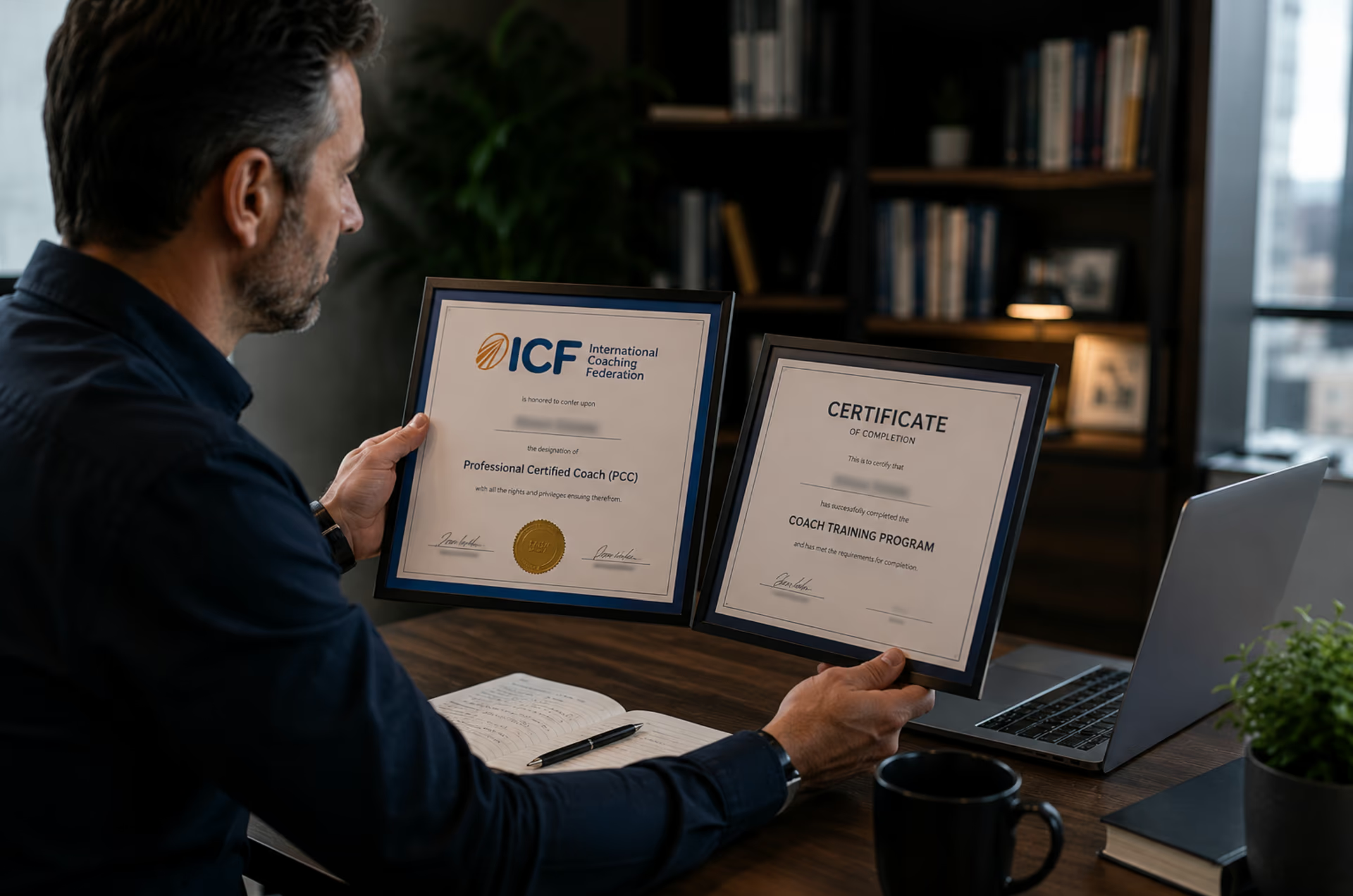
The ICF (International Coaching Federation) is the most widely recognized international accreditation body in the coaching field. Certification demonstrates that a specific training program has been completed, a certain number of hours of coaching practice have been conducted, an ethics exam has been passed, and supervision has been received.
This is the minimum standard—not a guarantee of quality, but a starting point.
Three Levels
ACC (Associate Certified Coach): A minimum of 60 hours of ICF-accredited training and 100 hours of coaching practice. Typically for those new to coaching.
PCC (Professional Certified Coach): A minimum of 125 hours of training, 500 hours of practice, mentor coaching, and a competency assessment. This is the level for experienced practitioners.
MCC (Master Certified Coach): Minimum of 200 hours of training and 2,500 hours of practice. The highest accreditation in the field.
As the level increases, both the depth of training and the experience gained through practice grow. PCC or higher is a strong starting point for most professional contexts.
Are There Good Coaches Without Certification?
Yes. There are coaches who have been coaching for many years and have deep practical experience but have not obtained ICF certification. The lack of certification does not automatically mean they are bad coaches.
However, when there is no certification, the following questions become more important: What training have they received? How much coaching experience do they have? Do they receive supervision? What ethical framework do they work within?
Certification Alone Is Not Enough
Two coaches may both hold PCC certification. One may have deep expertise in the area you want to work on, while the other may not. One may be able to build a strong foundation for your relationship, while the other may not.
Certification demonstrates minimum standards for training and ethics. The quality of the relationship, area of expertise, and personal compatibility, however, are evaluated beyond the certification itself.
Cevvela’s Perspective
- An ICF certification demonstrates minimum standards for education, practice, and ethics—it’s necessary but not sufficient.
- ACC is for beginners, PCC for experienced practitioners, and MCC for subject matter experts.
- The absence of a certification does not automatically mean a coach is unqualified; however, in such cases, it is necessary to inquire separately about their education, experience, and ethical framework.
- The quality of the coaching relationship and the coach’s area of expertise are evaluated beyond the scope of the certification.
- Cevvela works with coaches who hold ICF accreditation or have been trained in ICF-accredited programs.
{{contact}} To discuss this topic with Cevvela {{/contact}}