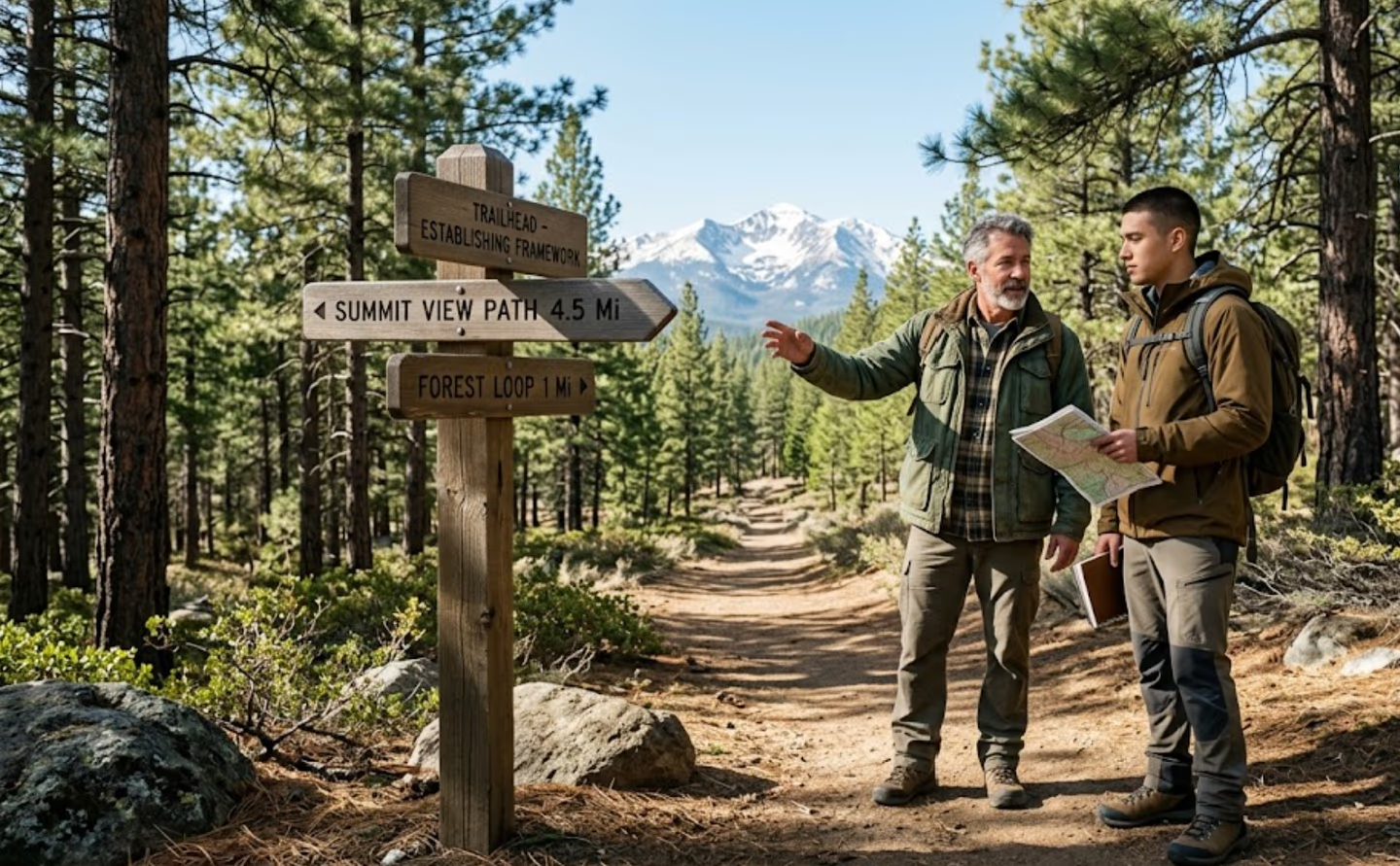
What to Talk About in Your First Mentoring Session
Most people spend those first fifty minutes introducing themselves — narrating their career from the beginning, filling every silence. The session ends. The mentor has listened. You have spoken. But nothing has actually been built.
A first mentoring session is not a CV presentation. It's a frame-setting conversation.
Start Before You Arrive
Before the meeting, ask yourself one question: What do I want to have gained from this relationship a year from now?
If your answer is somewhere in the territory of "a better career" or "more clarity," go one layer deeper. Which decision can't you seem to make? Where do you suspect you have a blind spot? What feels stuck in a way you can't quite name?
Bring those answers into the room. You can't invite a mentor into a journey you haven't yet located on the map.
What the Session Should Cover
Sketch your context — briefly
You don't need to tell your whole story. What matters is: where are you right now, how did you get here, and — most importantly — what's actually pressing on you?
If you can cover those three things in five to seven minutes, you've laid a solid foundation for everything that follows.
Be specific about what you want
"General mentoring support" tells almost no one anything. Specificity is what makes a session useful.
"I'd love to hear what the transition into a senior leadership role was actually like for you" lands very differently from "I have a decision in front of me and I'm looking for a perspective I haven't considered yet." Both are honest. Both give the mentor something to work with.
Talk about how you'll work together
How will you communicate between sessions? How often will you meet? Will your conversations follow a structure, or take shape around whatever's most alive at the time? Is there a shared understanding around confidentiality?
Raising these questions in the first session prevents a surprising number of quiet frictions later. Left unasked, each one tends to become its own small tangle.
Understand your mentor's approach
Ask them directly: How do you typically work? Do you tend to give direct guidance, or do you prefer to work through questions?
The answer tells you two things at once: how this relationship is likely to feel in practice, and whether this particular person is likely to be the right fit for you.
What Not to Ask
Questions like "What should I do to be successful?" put the mentor in an impossible position — and give you very little in return. That question deserves a book chapter, not a conversation.
Broad questions produce broad answers. Broad answers are rarely tailored to you.
After the Session
As soon as it's over, write something down. What did you hear? What stayed with you? What surprised you?
If the session felt right, send a short follow-up — not a thank-you note, but a signal of forward momentum: As you suggested, let's meet next month. I'm planning to bring this specific topic as a starting point.
That message says something a mentor notices: this person comes prepared.